The Myth of the One Perfect Sports Shoe
The one perfect sports shoe does not exist. Learn how sport, surface, and movement shape footwear choices so you can spot mismatches before they disrupt play.
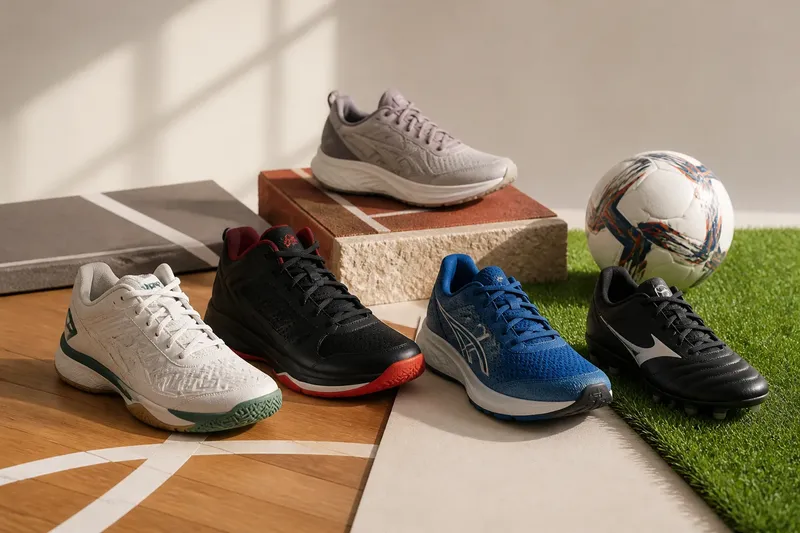
The most common shoe mistake is treating “sports shoe” as one universal category: a pair that feels comfortable for a jog gets worn for court drills, or a court shoe is taken onto a field. The one perfect sports shoe is a myth because footwear has to respond to particular movements and surfaces; a mismatch can feel awkward, wear out quickly, or interfere with how you move.
Comfort matters, but it cannot tell the whole story. A shoe is a small piece of equipment designed around patterns of force: forward running, repeated stops, lateral cuts, jumping, or grip on grass. Think of it like a kitchen knife: one blade may be useful for many jobs, but its shape makes some tasks easier and others less suitable.
Why does one pair feel wrong across different sports?
Sports place different demands on the foot. A runner mainly travels forward through repeated strides, while a basketball player may brake, pivot, jump, and move sideways within a small area. A tennis player makes quick lateral changes, and a football player needs traction that works with the playing surface and the rules of the game.
Footwear reflects those demands through features such as sole shape, tread, flexibility, upper support, and how the shoe fits around the heel and forefoot. No single design can optimize all of them at once. A sole with prominent lugs that bites into soft ground may feel clumsy on a smooth indoor court; a flat court outsole may lack useful purchase on wet grass.
What if the sole slips or grips too much?
Unexpected slipping often points to a mismatch between the outsole and the surface, though dust, moisture, worn tread, or loose debris can also change traction. “Grip” means the outsole’s ability to resist sliding against the ground. The useful amount depends on the activity: too little can make a push-off feel uncertain, while too much resistance can make a turn feel abrupt.
Start by identifying the actual surface, not just the sport’s name. Indoor courts may be wood, synthetic flooring, or another material; outdoor courts can be rougher and more exposed to grit. Field conditions also vary, and a stud pattern intended for one kind of ground may not suit another.
- Check whether the outsole is intended for the surface you use, such as indoor court, outdoor court, track, or field.
- Look at the tread for packed-in dirt, smooth worn areas, or damage that could affect contact.
- Notice whether slipping happens in a particular direction or only on a particular patch of ground.
- If the surface is dusty or damp, follow the venue’s rules for cleaning shoes and the manufacturer’s care guidance.
Say you play recreational basketball on a dusty indoor court and notice your shoes sliding during lateral stops. If the outsole is designed for outdoor use and its grooves are packed with grit, switching to a clean indoor-court pair and checking the floor conditions may make movement feel more predictable. That is a way to investigate the mismatch, not a promise that changing shoes will resolve every cause.
Why do quick turns feel unstable?
A shoe can feel secure when walking straight yet less settled during a cut or pivot. Possible causes include a sole that is too narrow for the wearer’s stance, an upper that lets the foot shift, a fit that is too loose, or a design intended for mostly forward movement. The motion itself matters: sudden direction changes ask the shoe and the surface to work together.
First check fit while standing and moving in the way the sport requires. The heel should not lift excessively, and the foot should not slide across the footbed during a gentle side-to-side shift. Laces can help secure the upper, but tightening them cannot turn a running shoe into a purpose-built court shoe.
Next, consider the shoe’s structure and intended use. Court models commonly emphasize lateral stability and a broader contact area than many running models. That does not make every court shoe suitable for every court sport; the pace, movement pattern, and surface still differ.
Why do feet feel tired or uncomfortable?
Discomfort can arise from a poor fit, a shape that does not suit the foot, the wrong type of shoe for the activity, or a sudden change in how long or intensely someone plays. It is not automatically evidence that a shoe needs more cushioning. A soft, flexible sole may feel pleasant during a short walk but provide a less settled platform for repeated lateral movement.
Check where the discomfort appears and when it starts. Pressure at the toes can suggest that the shoe is too short or too narrow; heel movement can point to a loose fit; rubbing may come from a seam, sock, or shape mismatch. Compare how the shoe feels while standing, walking, and performing gentle sport-specific movements, rather than relying only on how it feels in a store aisle.
If discomfort continues, becomes severe, or changes the way you move, stop using the pair for that activity and seek advice from a qualified health professional. For fit or product questions, the maker’s sizing and use guidance can clarify what the model was designed to do.
What should you try when a shoe wears out quickly?
Wear patterns can offer clues, but they are not a diagnosis of gait or technique. A shoe used on a surface it was not designed for may show damage sooner; so may frequent use, rough ground, or care that does not suit its materials. Inspect both shoes and compare the outsole, seams, and upper rather than judging by a single scuffed patch.
If the tread has become smooth in the area that meets the ground, or the upper no longer holds the foot securely, the shoe may no longer suit that activity. Keep separate pairs for distinct surfaces if that is practical, and avoid using an indoor-court outsole on abrasive outdoor ground unless its maker identifies it as suitable. Follow the manufacturer’s instructions for cleaning and storage, since materials and construction differ.
How should you choose shoes for a sport and surface?
Begin with the movement and playing environment, then compare shoes that are made for that use. A short selection routine can keep the decision focused:
- Name the activity. Separate running, court play, field sports, and general gym work rather than shopping under a broad “athletic” label.
- Identify the surface. Note whether it is indoor flooring, pavement, track, artificial turf, natural grass, or another surface.
- Describe the movement. Consider whether the activity involves sustained forward travel, frequent stops, lateral cuts, jumping, or a mixture.
- Check the shoe’s stated use. Read the product description and outsole information for the surface and sport, not just the model name.
- Assess fit in motion. Try the pair with the socks you expect to wear and make gentle movements that resemble the activity.
- Choose the closest match. If one pair must serve several activities, prioritize the activity and surface you use most, while recognizing the trade-off.
Labels and model descriptions are more useful than broad claims such as “all-purpose.” A cross-training shoe may suit varied gym movements, but it is not automatically the right choice for distance running, a court match, or a muddy field. Where suitability depends on a specific surface or sport, follow the manufacturer’s guidance and the venue’s rules.
What questions help explain a footwear mismatch?
Can running shoes be used for court sports?
They may be comfortable for casual movement, but many running shoes are built mainly for forward travel rather than repeated sideways cuts. For regular court play, compare the shoe’s lateral support, outsole, and intended surface with the demands of the sport.
Are cross-training shoes suitable for every activity?
Cross-training models are intended to handle varied exercise, but “varied” does not mean every sport or surface. Check whether the shoe’s traction and structure match the specific movement you plan to do.
Does more cushioning always mean more comfort?
No. Cushioning changes how a shoe feels underfoot, but comfort also depends on fit, stability, flexibility, and activity. A highly cushioned shoe may not feel settled during quick lateral movements.
When should a pair be replaced?
Look for worn tread, damaged seams, a loose or collapsing upper, or a change in fit that affects movement. Replace a pair when its condition no longer suits the activity, and seek professional advice if pain persists rather than relying on a new shoe alone.
What does the one perfect sports shoe myth miss?
The one perfect sports shoe is not a single model waiting to be discovered; it is a shortcut that ignores how sport, surface, and movement interact. The practical choice is the pair whose design fits the job most often, with comfort and secure fit checked in motion rather than assumed from appearance.
When a shoe feels wrong, treat that feeling as a clue: identify when it happens, inspect the surface and the shoe, then compare the pair’s intended use with the movement. That approach helps separate a footwear mismatch from a fit or condition problem—and makes the next choice more informed.